rectifier smoothing cap

General discussion area for tube amps.

Moderators: pompeiisneaks, Colossal

Post Reply
jestaudio
Posts: 654
Joined: Sat Mar 12, 2011 4:12 pm
Location: UK

rectifier smoothing cap

Post by jestaudio »

Can anyone suggest the apprpriate rating for a smoothing cap on a diode rectifier circuit, i was thinking around 450 v olts but not really sure what uf i can get away with
Cheers :D
User avatar
Colossal
Posts: 5205
Joined: Sat Oct 20, 2007 9:04 pm
Location: Moving through Kashmir

Re: rectifier smoothing cap

Post by Colossal »

jestaudio wrote:Can anyone suggest the apprpriate rating for a smoothing cap on a diode rectifier circuit, i was thinking around 450 v olts but not really sure what uf i can get away with
Cheers :D
Do you mean a recommended capacitance value or a recommendation for a particular brand of cap? For a reservoir cap just after a diode rectifier, the value could be low to high depending on the circuit and the degree of filtering (Hz cutoff) you require, if you will be using a choke, where you will be taking your plate voltage from, etc. The voltage requirement is important depending on the operating voltages. So if you have something, say a single ended amp, operating at maybe 275-300V on the power tube, then a 450V cap should suffice. I personally like a bit of added security however so it very much depends on the application. Can you clarify your question a bit more?
jestaudio
Posts: 654
Joined: Sat Mar 12, 2011 4:12 pm
Location: UK

Re: rectifier smoothing cap

Post by jestaudio »

Colossal wrote:
jestaudio wrote:Can anyone suggest the apprpriate rating for a smoothing cap on a diode rectifier circuit, i was thinking around 450 v olts but not really sure what uf i can get away with
Cheers :D
Do you mean a recommended capacitance value or a recommendation for a particular brand of cap? For a reservoir cap just after a diode rectifier, the value could be low to high depending on the circuit and the degree of filtering (Hz cutoff) you require, if you will be using a choke, where you will be taking your plate voltage from, etc. The voltage requirement is important depending on the operating voltages. So if you have something, say a single ended amp, operating at maybe 275-300V on the power tube, then a 450V cap should suffice. I personally like a bit of added security however so it very much depends on the application. Can you clarify your question a bit more?
Sure, its a marshall style circuit working at 580 before rectification, quad el34 and a gz34 rectifier as standard, what i,m looking to do is have a option between the both, i understand the basic circuit but getting into the maths blows my brain, please bear in mind although i,m a good sparky(english slang :D ) this is only my third build so i,m still learning as i go along :lol:
Alexo
Posts: 477
Joined: Thu Mar 22, 2007 3:27 am
Location: The Hudson Valley

Re: rectifier smoothing cap

Post by Alexo »

Tube rectifiers have a limit on how big that first cap can be - not so with solid state rect's - you can go into the hundreds of UF if you really want to (not a bad idea in a bass amp) but I do like to lay a few diodes in series if that's the case, just to increase the current handling spec of the rectifier circuit - when you switch that amp on, a big reservoir cap looks a lot like a short circuit until it charges up!
Life is a tale told by an idiot -- full of sound and fury, signifying nothing.

...in other words: rock and roll!
User avatar
Lynxtrap
Posts: 354
Joined: Fri Feb 18, 2011 12:37 pm
Location: EU

Re: rectifier smoothing cap

Post by Lynxtrap »

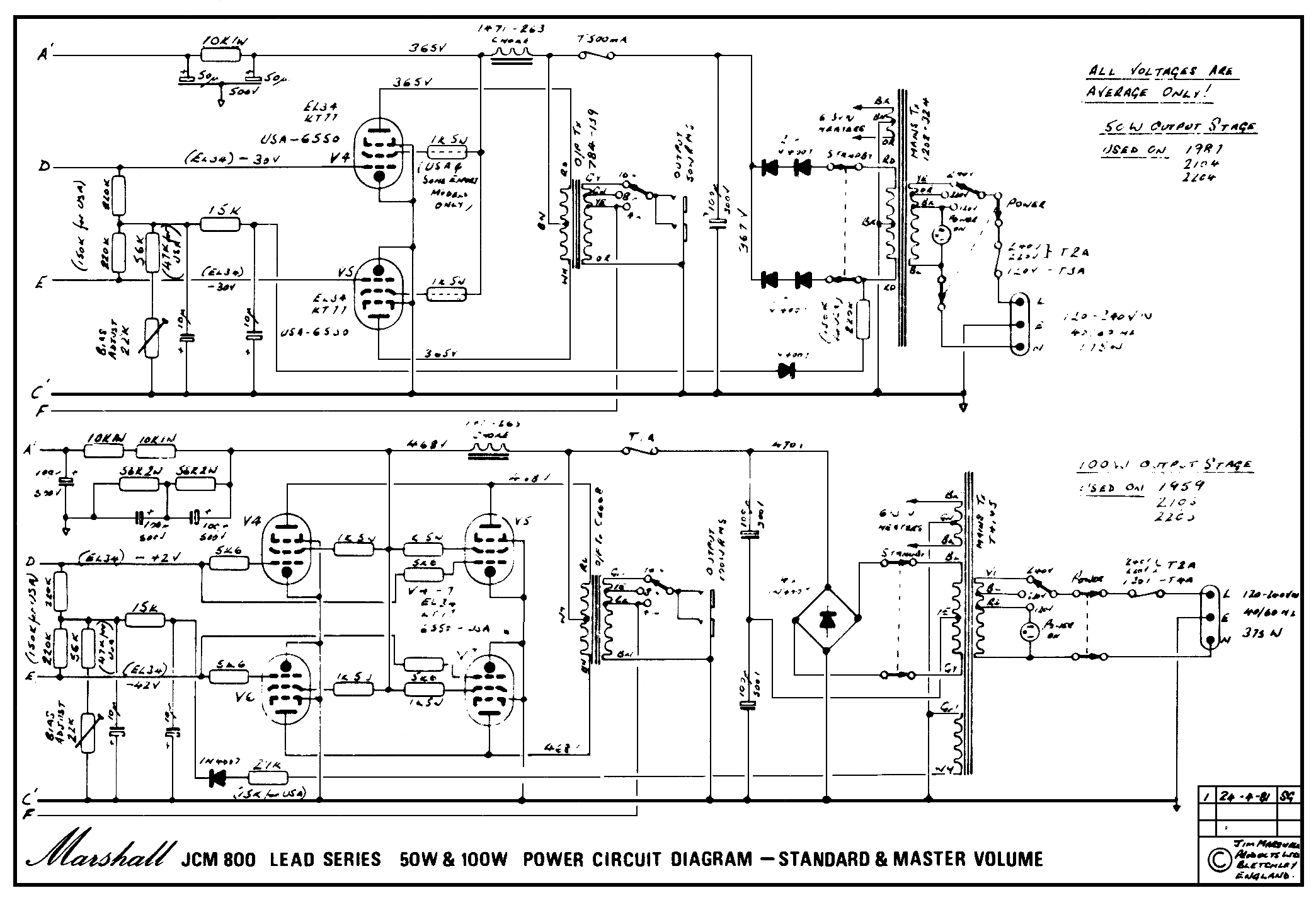
Have you checked Marshall schematics for comparison? Like the JCM800 and others http://www.drtube.com/schematics/marshall/jcm800pw.gif
tubeswell
Posts: 2337
Joined: Thu Mar 27, 2008 6:42 am
Location: Wellington. NZ

Re: rectifier smoothing cap

Post by tubeswell »

jestaudio wrote: its a marshall style circuit working at 580 before rectification
By '580' do you mean the HT winding is 580-0 VAC (i.e.: without a centre tap)? or 290-0-290VAC or 580-0-580VAC (centre tapped)?

Generally the maximum voltage rating of the filter caps should be above (20% above is a good RoT) what the likely B+ at the reservoir cap is. This usually ensures they handle any switch on 'surge'.

When you first switch the amp on in amps that are SS rectified or amps that have directly heated tube rectifiers, there is time period where the voltage surges to its highest point before the load kicks in - that's where the filter cap voltage ratings need to be rated to withstand that peak of the surge.

Also, in the case with amps that have a standby switch in the B+ rail after the reservoir cap, the reservoir cap will see a higher (unloaded) voltage (until the standby is switched on).

Having said that, a GZ34 (being an indirectly heated rectifier) heats up slowly, so you can use these comfortably in amps without standby switches knowing that the amp wont exhibit that same extreme surge at switch on (because the GZ34 heaters heat up at the same rate as the other tube's heaters, so the B+ rises very gradually up to operating/idle voltage).

Having said that, although e-cap voltage ratings are ball-park, they are usually conservatively rated by the factory, so they can typically easily withstand running at their max voltage rating (or above their max voltage rating for short periods).
He who dies with the most tubes... wins
Post Reply